


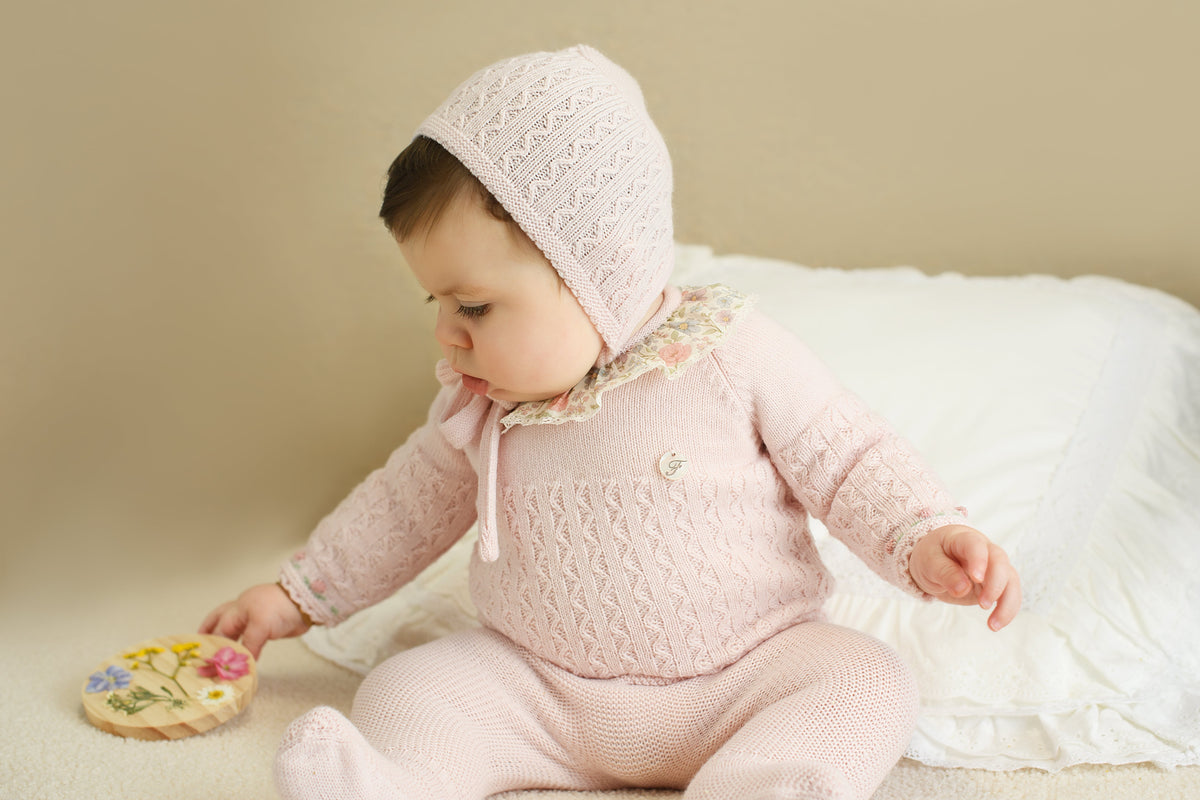
A Parent’s Guide to Children’s Knitwear: Cotton, Wool, Acrylic or Cashmere?
If you have ever turned over a beautiful baby sweater and checked the label, you have probably seen everything from 100% cotton to 100% acrylic, wool blends, cashmere blends and combinations of fibers you may not recognize.
And if you are shopping for a baby or child, it is natural to wonder: Which one is actually best?
The answer is not quite as simple as choosing natural over synthetic—or assuming that the most expensive fiber is automatically the best choice.
Each fiber has different characteristics when it comes to warmth, softness, breathability, durability and care. More importantly, the right knit depends on who will wear it, when they will wear it and how you plan to use it.
Here is our parent-friendly guide to understanding children's knitwear.
First: What Exactly Is Knitwear?
One common misconception is that “knit” refers to a particular material.
It doesn't.
Knitting is the way a fabric is constructed, not the fiber it is made from. A knitted cardigan can be made from cotton, wool, acrylic, cashmere—or a blend of several fibers.

That is why two sweaters that look quite similar can feel completely different, provide different levels of warmth and require very different care.
So when shopping for knitwear, look beyond the word knit and check the fiber composition.
Cotton: Soft, Breathable and Versatile
Cotton is one of our favorite fibers for babies, particularly for transitional weather and year-round layering.
Why parents love it
Cotton is naturally breathable and generally feels soft against the skin. It absorbs moisture and doesn't trap as much heat as heavier insulating fibers, making it especially practical for babies who will spend much of their time indoors.
It is also incredibly versatile.
A lightweight cotton knit can work beautifully in spring, autumn and even winter when layered appropriately. For families living in warmer climates (hello, Florida and Puerto Rico) cotton knitwear can be particularly useful because it gives you the beautiful appearance of a traditional knit without necessarily providing excessive warmth.
Things to consider
Cotton is not as insulating as wool, so it may not provide enough warmth by itself in very cold climates.
It can also lose some of its shape over time depending on how it is knitted and cared for, and some cotton garments may shrink if washed or dried at high temperatures.
We love cotton for:
Newborns, everyday baby sets, lightweight cardigans, transitional weather, warmer climates and layering.

Wool: Naturally Warm and Excellent at Regulating Temperature
Wool has been used to dress babies and children for generations—and for good reason.
Its biggest advantage is not simply that it is warm. Wool is an excellent insulator while also helping regulate temperature.
The structure of wool fibers allows them to trap air, creating insulation without requiring an extremely heavy garment. Wool can also absorb moisture vapor while still feeling relatively dry.
That makes a good wool knit wonderfully cozy for autumn and winter.
But isn't wool itchy?
Sometimes.
Not all wool is the same.
The sensation depends on the type and fineness of the wool fiber. Coarser wool can feel scratchy against sensitive skin, while finer fibers—such as merino wool—can feel considerably softer.
For babies, we particularly like soft wool or wool-blend pieces worn over a cotton bodysuit or blouse. This gives you the warmth of wool without necessarily placing the knit directly against very sensitive skin.
Things to consider
Wool generally requires more careful washing than cotton or acrylic. Heat and agitation can cause wool fibers to shrink or felt, which is why the care label matters.
We love wool for:
Cold climates, autumn and winter, warm cardigans, outer layers and beautiful special-occasion knits.

Acrylic: The Fiber Parents Sometimes Misunderstand
This is probably the fiber that creates the most questions.
Parents occasionally see 100% acrylic on the label of a beautiful European baby knit and assume that because acrylic is synthetic, the garment must somehow be inferior.
That isn't necessarily the case.
Acrylic was developed in part to create a lightweight fiber with some characteristics reminiscent of wool. Modern acrylic yarns can be exceptionally soft, maintain their shape well and offer warmth without the care requirements of natural wool.
And those qualities can be extremely useful in children's clothing.
Why children's brands use acrylic
Babies are messy.
Milk happens. Spit-up happens. Toddlers happen.
A beautifully knitted outfit that requires extremely delicate handling every single time it is worn isn't always practical for everyday family life.
Acrylic can offer:
- Softness
- Warmth
- Lightweight construction
- Good shape retention
- Color retention
- Durability
- Easier care
- A lower price point than luxury natural fibers
That combination is one reason you will see acrylic used by established European children's knitwear brands, including in beautifully detailed newborn sets.
Is acrylic breathable?
Not to the same degree as many natural fibers.
Because acrylic is synthetic, it generally does not manage heat and moisture in exactly the same way as cotton or wool. That is worth considering when dressing a baby, particularly in warm environments.
The solution isn't necessarily to avoid acrylic. It is to dress appropriately for the temperature and use layers thoughtfully.
For example, an acrylic knit set worn over a breathable cotton bodysuit may be perfectly appropriate for a cool day, while that same outfit might be too warm outdoors in Miami.
We love acrylic for:
Everyday knitwear, baby sets, easy-care pieces, beautiful knits that will be worn frequently and families looking for warmth and durability without the maintenance of wool or cashmere.

Cashmere: Exceptionally Soft, Lightweight Luxury
Cashmere comes from the fine undercoat of cashmere goats and is prized because its extremely fine fibers can provide remarkable warmth without much weight.
That combination—warmth + softness + lightness—is what makes cashmere so special.
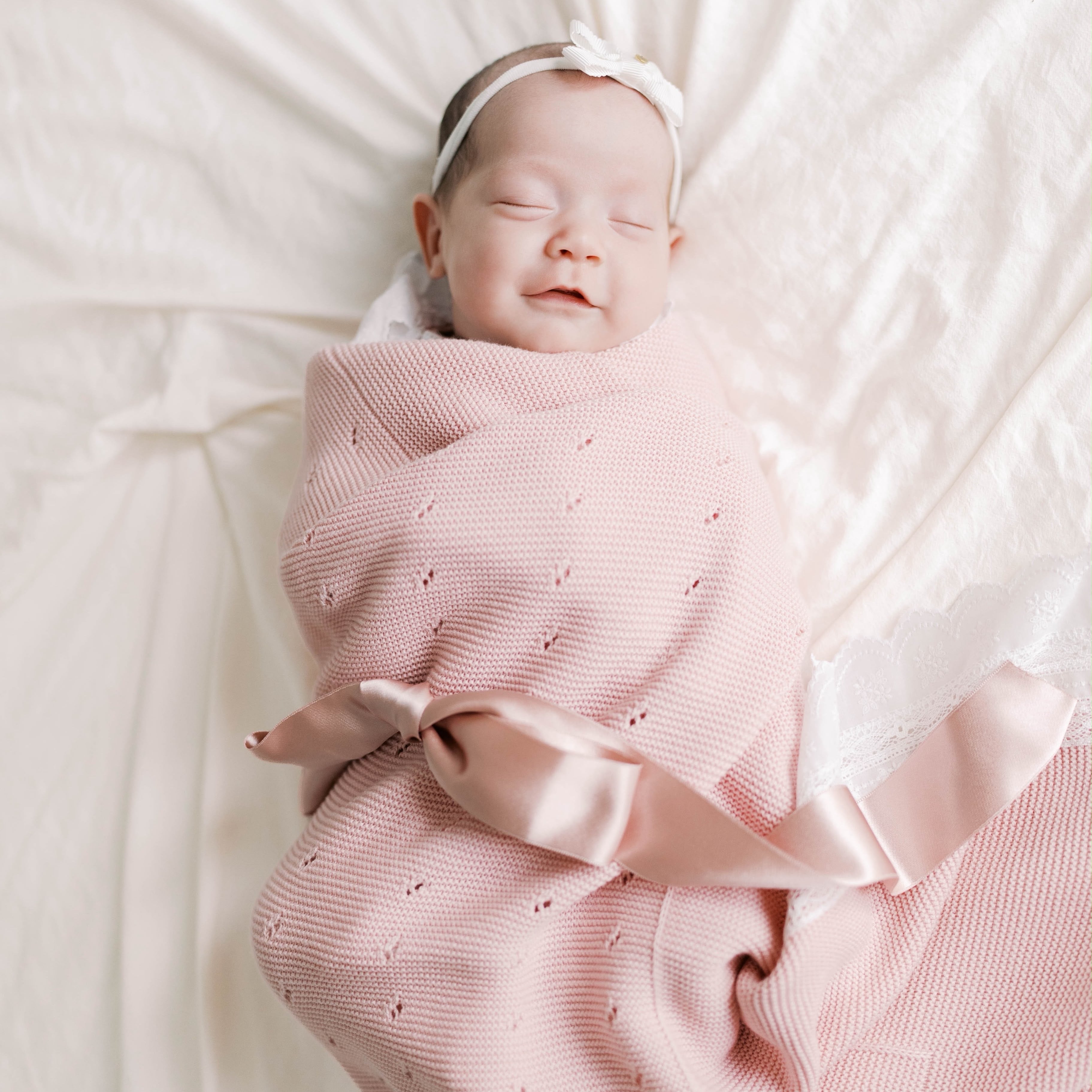
For a baby, a beautiful cashmere or cashmere-blend knit can feel incredibly soft and luxurious without being bulky.
Does 100% cashmere always mean better?
Not necessarily.
Fiber percentage tells you what something is made from. It does not tell you everything about the quality of the yarn, construction or finished garment.
And in children's clothing, a blend can sometimes be very intentional.
Combining cashmere with wool, cotton or a manufactured fiber can change the garment's durability, elasticity, warmth, price and ease of care.
A cashmere blend may therefore be a very practical way to introduce some of cashmere's softness and warmth while creating a garment better suited to real life with children.
Things to consider
Cashmere requires careful handling and can pill with friction. It is also considerably more expensive than many other fibers.
For that reason, we tend to think of cashmere as something particularly beautiful for newborn pieces, special gifts and garments you hope to preserve and pass down.
We love cashmere for:
Newborn gifts, special pieces, heirloom wardrobes, cold weather and parents looking for an exceptionally soft, lightweight knit.

So, Which Fiber Is Best for Your Child?
There really isn't one winner.
Think instead about how your child will wear the garment.
If you live somewhere warm and want a lightweight knit, cotton may make the most sense.
If you need genuine warmth for a cold winter, wool can be wonderful.
If you want something soft, practical, durable and relatively easy to care for, don't be afraid of a beautiful acrylic knit.
And if you are looking for something exceptionally soft, lightweight and special, cashmere or a cashmere blend may be worth the investment.
| Fiber | Warmth | Breathability | Softness | Easy Care | Best For |
|---|---|---|---|---|---|
| Cotton | Light–Moderate | Excellent | Soft | Generally easy | Newborns, layering, transitional weather & warm climates |
| Wool | High | Excellent | Varies by wool | More delicate | Cold weather, winter & warm outer layers |
| Acrylic | Moderate–High | Lower | Can be very soft | Easy | Everyday knits, frequent wear & easy-care baby sets |
| Cashmere | High without bulk | Very good | Exceptionally soft | Delicate | Newborns, special pieces, gifts & heirloom wardrobes |
| Blends | Varies | Varies | Varies | Often more practical | Combining softness, warmth, durability and easier care |
Don't Forget About Blends
Some of our favorite children's knits aren't made from a single fiber at all.
And that isn't necessarily a compromise.
Textile blends allow manufacturers to combine desirable properties from different fibers.
A wool blend might make a garment easier to care for. A cashmere blend can provide softness without making the piece quite as delicate. Cotton blended with another fiber may improve shape retention or elasticity.
Instead of automatically looking for 100% anything, ask what you need the garment to do.
That is ultimately much more useful.
The Care Label Matters Just as Much as the Fiber Label
One final piece of advice: always read the manufacturer's care instructions.
Two garments with similar fiber compositions can still require different care because yarn construction, dyes, finishing and the way the garment was knitted all matter.
When in doubt, cooler temperatures and gentle handling are generally kinder to knitwear. Avoid assuming that because one cotton sweater survived the dryer, another one will too.
And for those beautiful little pieces you hope to save for another sibling—or perhaps even another generation—proper washing and storage make an enormous difference.
Our Take at El Rincón de María

After almost a decade of dressing babies and children in European knitwear, we have learned that parents shouldn't feel pressured to shop according to a simple “natural is good, synthetic is bad” rule.
Children's clothing has to work in real life.
We look at softness, construction, fit, warmth, practicality and design—not simply the fiber listed on the tag.
Sometimes the piece we recommend will be cotton. Sometimes it will be wool. Sometimes it will be a beautiful cashmere blend. And yes, sometimes it will be acrylic.
The better question isn't “Which fiber is the best?”
It is:
“Which one is best for my child, our climate and how we are going to use it?”
And if you're ever unsure, ask us.
We know the collections we carry, how they fit and how they feel in person. Email us at info@shopelrincondemaria.com and we'll be happy to help you choose the right knit, size or outfit for your little one.

Written by Ana Maria Certain
Leave a comment
This site is protected by hCaptcha and the hCaptcha Privacy Policy and Terms of Service apply.